The best way to choose games like Factorio is to decide which part you want more of: rearranging a production line, joining distant factories, teaching workers a procedure, or giving all those machines a different purpose. These 16 alternatives cover those branches with individual tradeoffs, current Steam modes and release status, and a screenshot for every game.
This is a comparison of automation problems, not a ranking in which every entry is a direct replacement. A factory puzzle can satisfy the urge to optimize without providing a persistent world; a colony can give output a human purpose while adding needs you may not want. Start with the quick choices, then use the table to eliminate mismatched modes or pressures.
Jump to: quick choices · comparison table · belts and scale · factories inside a world · goods with another purpose · workers instead of belts · machine puzzles · sources and method
Choose what you want to automate
- More routing, fewer outside pressures: shapez 2 removes enemies, building costs and resource depletion. Factory Town keeps a village economy but explicitly removes enemies and starvation. Learning Factory adds customer routes and sales-data experiments without enemies.
- A factory you can physically explore: compare Satisfactory's multi-story installations, FOUNDRY's editable voxel world and Techtonica's excavated story spaces. FortressCraft Evolved adds deep extraction and defense; Eden Crafters puts environmental transformation at the end of the chain.
- A larger system to support: Dyson Sphere Program links planetary factories; Captain of Industry adds terrain, population needs and pollution. Neither currently lists native co-op in Steam.
- Different workers, different bottlenecks: Oddsparks makes creature traffic the transport problem; Autonauts teaches bots repeatable jobs; Desynced emphasizes configurable units and logistics rules. Nova Lands uses helper bots to free time for island exploration.
- A machine to solve rather than a world to grow: Infinifactory and Opus Magnum give you individual production assignments. The second puts programmable-arm timing on a visible instruction timeline.
The distinction matters to real players. A Factorio community request asks for the same automation feeling without requiring a one-to-one copy. Another pair's online-co-op request puts shared goals above survival chores. A third question about a different theme attracts both village-production suggestions and disagreement about how far a recommendation can stray from the requested loop. These are individual preferences, not a community ranking or a measure of search demand.
Compare the problem, pressure and play mode
Every game below currently lists Windows on Steam. This is not a Steam Deck, low-end-PC, controller or performance recommendation. “Online co-op” means the current store lists a native network mode; it does not verify a particular player cap, cross-play, dedicated server or one-screen couch setup. FOUNDRY also lists LAN co-op. Community mods, including Dyson Sphere Program multiplayer mods, are a separate arrangement. Early Access labels describe the version offered now, not a promise about future development. The wide table scrolls horizontally on a phone.
| Game | Automation problem | Main difference or limit | Steam mode | Status |
|---|---|---|---|---|
| shapez 2 – Factory | Transforming shapes and routing between layers | No enemies, building costs or depleted resources; single-player | Single-player | Released |
| Dyson Sphere Program | Planetary factories and interstellar transport | Dark Fog combat content; Early Access; single-player listed | Single-player | Early Access |
| Satisfactory | First-person factories, vertical space and distant outposts | Exploration and wildlife combat alongside production; online co-op | Online co-op | Released |
| FOUNDRY | Voxel terrain, grid construction, belts and pipes | Early Access; online and LAN co-op are listed | Online co-op | Early Access |
| Techtonica | Underground factories, excavation and campaign exploration | Released campaign with online co-op; not just an open production board | Online co-op | Released |
| FortressCraft Evolved! | Deep extraction, vertical supply and base defense | Voxel exploration and tower defense; online co-op | Online co-op | Released |
| Eden Crafters | Production chains for climate, atmosphere and water | First-person survival and environmental hazards; online co-op | Online co-op | Released |
| Captain of Industry | Mining terrain, factory logistics and population supplies | People, waste and pollution add constraints; Early Access; single-player | Single-player | Early Access |
| Factory Town | Workers, markets and mechanical transport in a village | No enemies or starvation; single-player | Single-player | Released |
| Learning Factory | Production, customer routing and sales-data experiments | No enemies; data/model learning is part of the theme; single-player | Single-player | Released |
| Oddsparks: An Automation Adventure | Sparks carrying and crafting along a logistics network | Adventure, combat and base defense as well as automation; online co-op | Online co-op | Released |
| Autonauts | Teaching workerbots to repeat production tasks | Visual programming and colony needs; single-player | Single-player | Released |
| Desynced | Beltless logistics, configurable bots and scripting | Exploration and hostile-world survival; online co-op | Online co-op | Released |
| Nova Lands | Small bot-run production chains and island exploration | Exploration and combat or negotiated encounters; single-player | Single-player | Released |
| Infinifactory | Assembling prescribed products in a three-dimensional puzzle | Campaign puzzles and solution optimization, not an endless planetary factory | Single-player | Released |
| Opus Magnum | Programmable arms, spatial assembly and timing | Separate alchemical puzzles, not a persistent resource economy; single-player | Single-player | Released |
Belts, transformations and planetary scale
1. shapez 2: redesign the line without paying for every rebuild
Transforming shapes and routing between layers. Single-player · Released.
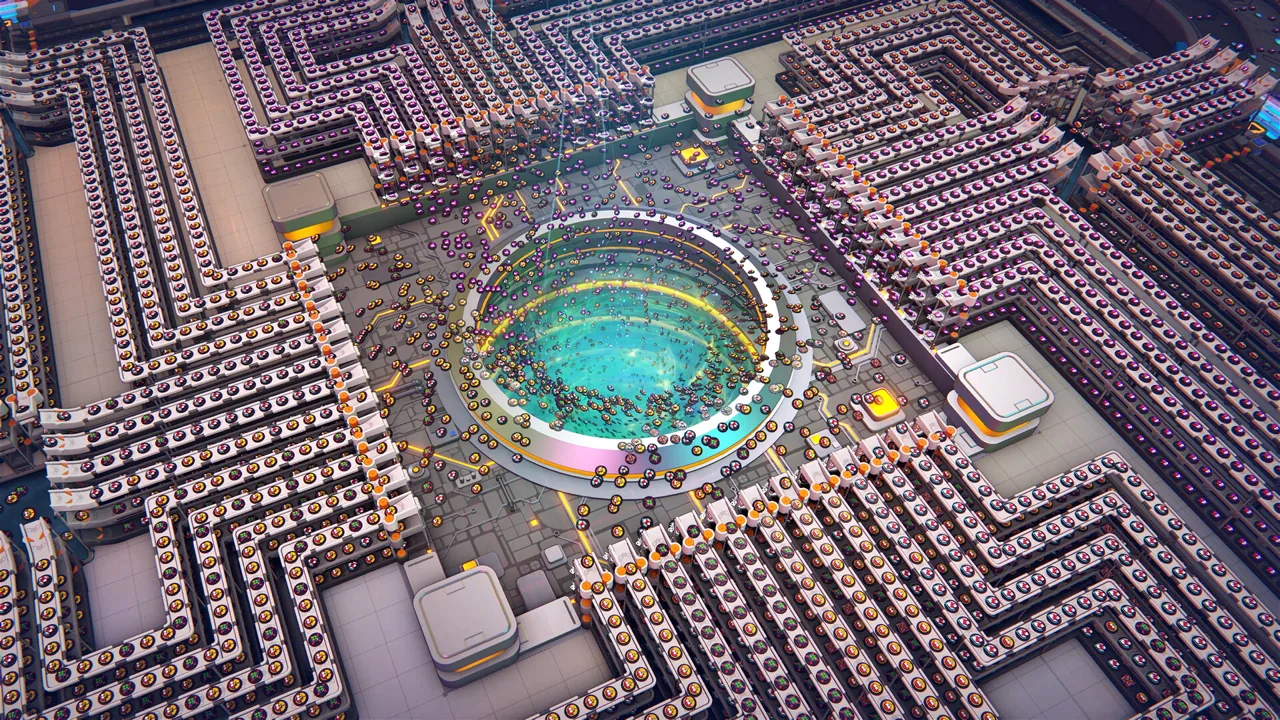
Extract geometric shapes, split them into useful pieces, paint or stack them, and deliver the requested result. The factory spreads across three building layers, with space belts and trains connecting its platforms. Because buildings are free, resources do not run out and there are no enemies or time limits, you can demolish a bad design and concentrate on why the replacement flows better.
Choose it if Factorio's attraction is the transformation-and-routing problem itself. Look elsewhere if mining a hostile world or defending the production line is what makes that problem interesting to you. The tradeoff is deliberate: this is a logistics sandbox stripped of several outside pressures, not a promise that every shape puzzle is easy. The current listing is a released 1.0 game, rather than the Early Access version discussed in older threads.
2. Dyson Sphere Program: turn distant planets into one supply network
Planetary factories and interstellar transport. Single-player · Early Access.
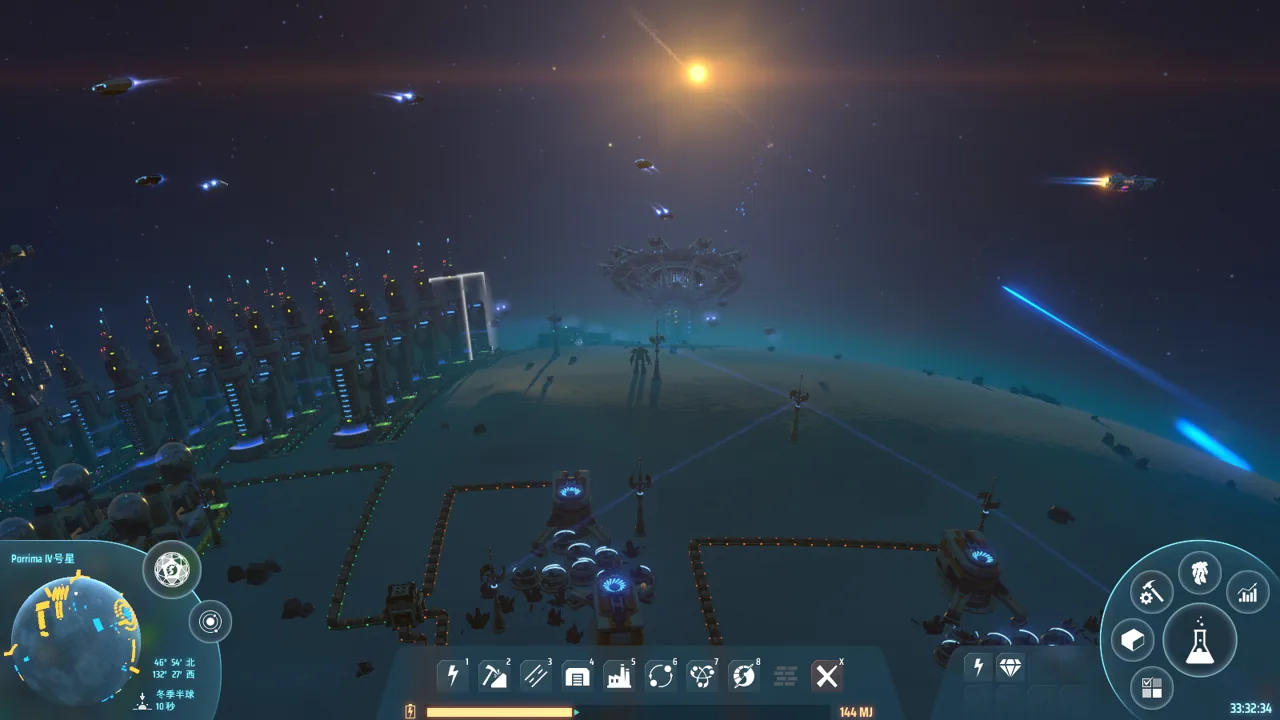
Start with mines and conveyors on a planetary surface, then build the production and transport needed for a star-scale energy project. Different worlds supply different resources, so an efficient local factory eventually becomes one part of an interplanetary network. Blueprints let you reuse useful layouts instead of reconstructing every production area from memory.
Choose it if you want the factory to outgrow the place where you first landed. The key change is coordinating production across worlds while working toward a Dyson sphere, rather than simply choosing a different backdrop for one belt network. Check the boundaries: the official description includes Dark Fog attacks and defensive structures, and the game is still in Early Access. Steam currently lists single-player; a community multiplayer mod is not the same thing as built-in online co-op.
Factories inside a world you explore
3. Satisfactory: walk through the factory you designed
First-person factories, vertical space and distant outposts. Online co-op · Released.
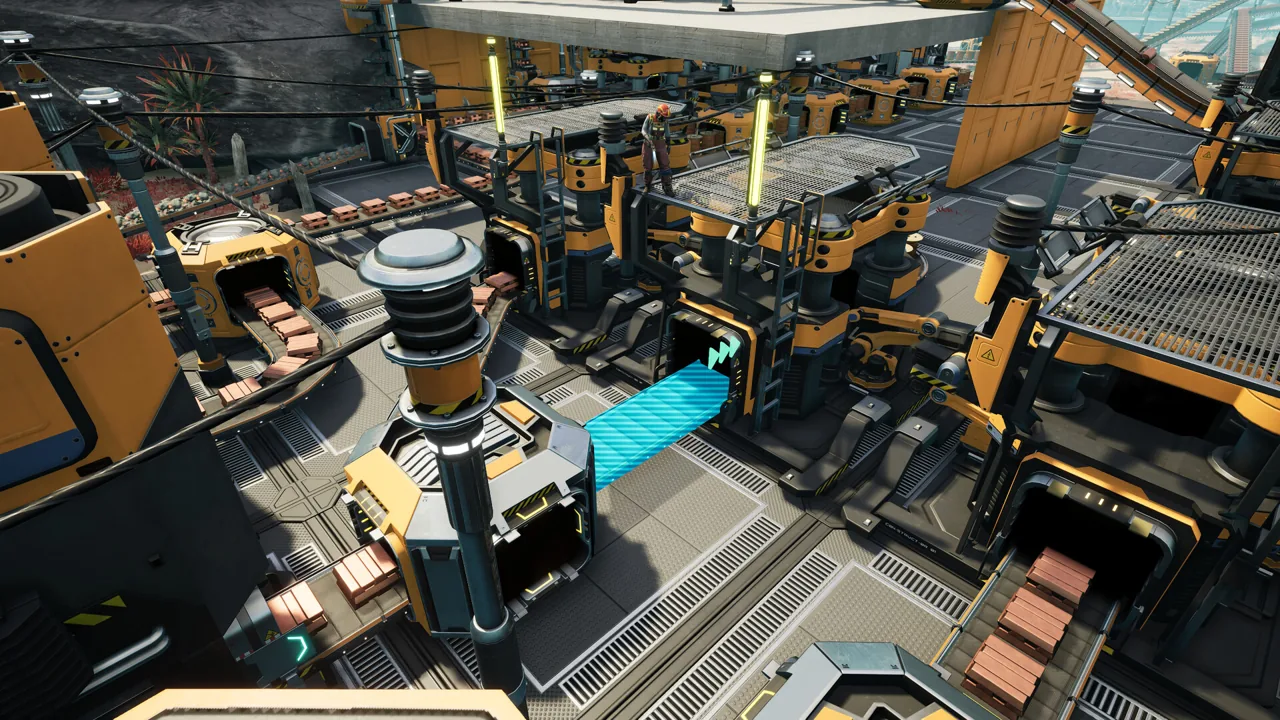
Satisfactory keeps the assembly-line attraction but puts you inside a first-person open world. Build multi-story factories, route conveyors between machines, move liquids through pipes and connect faraway outposts with automated trucks or trains. Looking up at a structure you built makes the factory's scale a physical place to navigate, not only a diagram to inspect.
Choose it if walking through and shaping a huge industrial building sounds as rewarding as improving its output. Online co-op also offers a shared construction project for friends. Know what changes: expeditions for materials and encounters with local wildlife sit beside the factory work. It is not a purely abstract routing puzzle. If you mainly want to compare every machine from an overhead view and avoid an exploration layer, start with shapez 2 or Factory Town instead.
4. FOUNDRY: make the terrain fit a first-person production plan
Voxel terrain, grid construction, belts and pipes. Online co-op · Early Access.
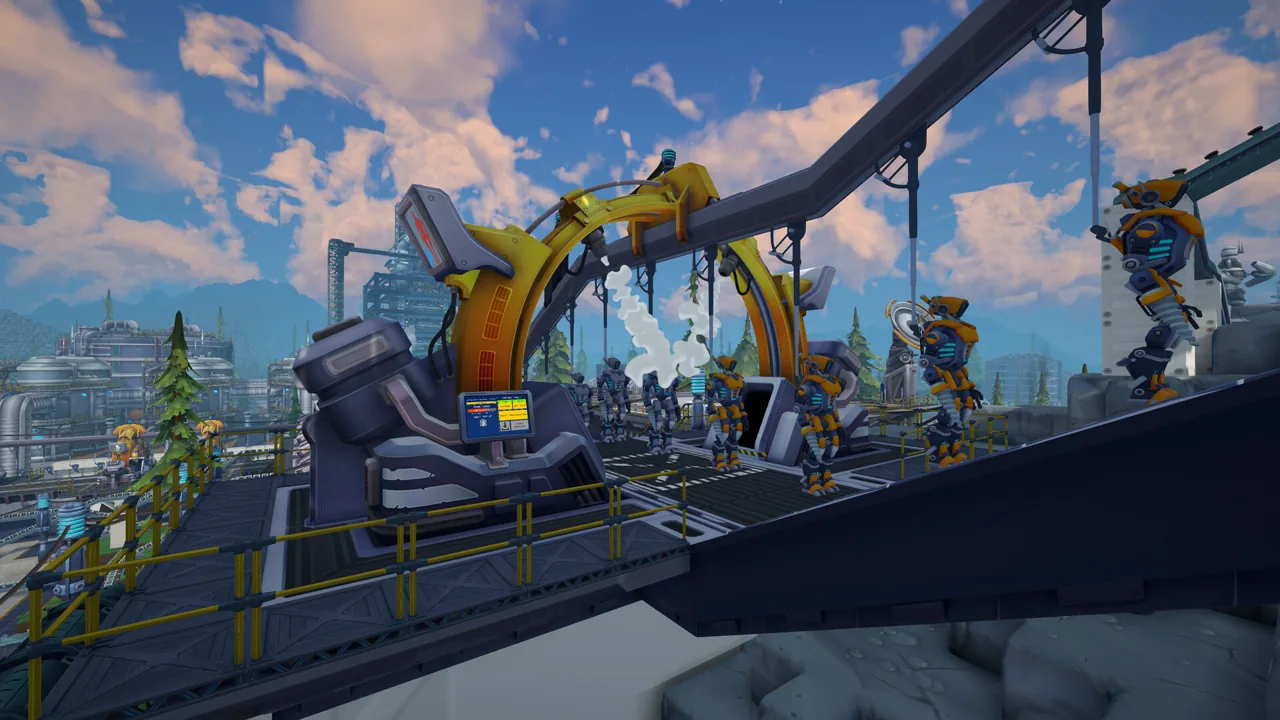
FOUNDRY combines first-person factory construction with a procedurally generated voxel world you can reshape block by block. Dig down, build above the surface and use a grid to position machinery precisely. Belts, pipes, elevators and power generation turn the excavated space into an expanding production network rather than leaving it as decorative construction.
Choose it if you like Satisfactory's physical perspective but want terrain modification to be part of making room for the factory. Its own distinction is the connection between an editable world, a construction grid and the demands of your lines. Before organizing a group, note that Steam lists online and LAN co-op; LAN is a network arrangement, not a promise of two people sharing one screen. The current release remains in Early Access, so judge the available version rather than assuming a finished feature set.
5. Techtonica: dig the space for a factory inside a story campaign
Underground factories, excavation and campaign exploration. Online co-op · Released.
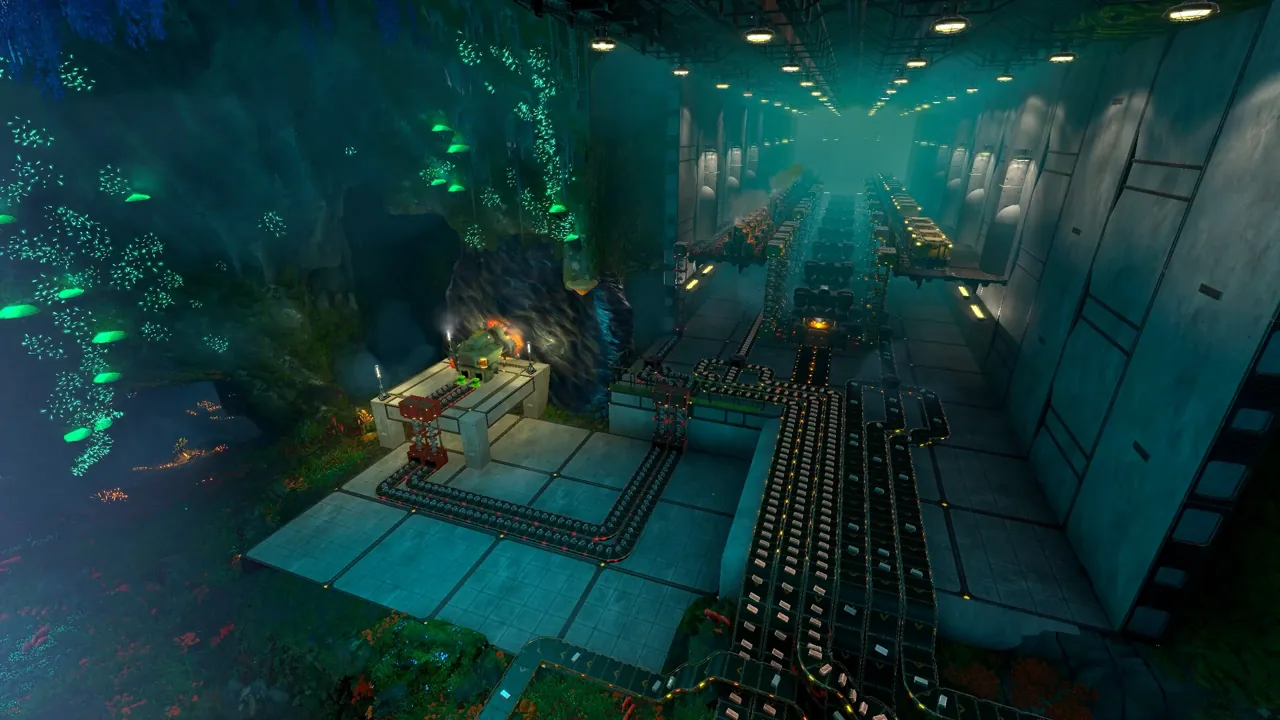
Techtonica places conveyors, inserters and production machines beneath an alien planet's surface. Excavation is part of finding both resources and usable space: its MOLE tool removes rock so that you can carve out the home for your machines. Exploration also leads to facilities, artifacts and the mystery connecting the campaign.
Choose it if you want a factory project linked to a voiced science-fiction story and digging through a subterranean environment. The official description supports solo play and online co-op, while the current Steam listing is released rather than Early Access. Look elsewhere if you primarily want an open-ended production canvas with little narrative interruption. The useful distinction is not merely 'Satisfactory underground': your interest in excavation and discovering the campaign matters alongside your interest in manufacturing. This comparison concerns the available game, not a forecast of future updates.
6. FortressCraft Evolved: bring the underground factory back to a defended surface
Deep extraction, vertical supply and base defense. Online co-op · Released.
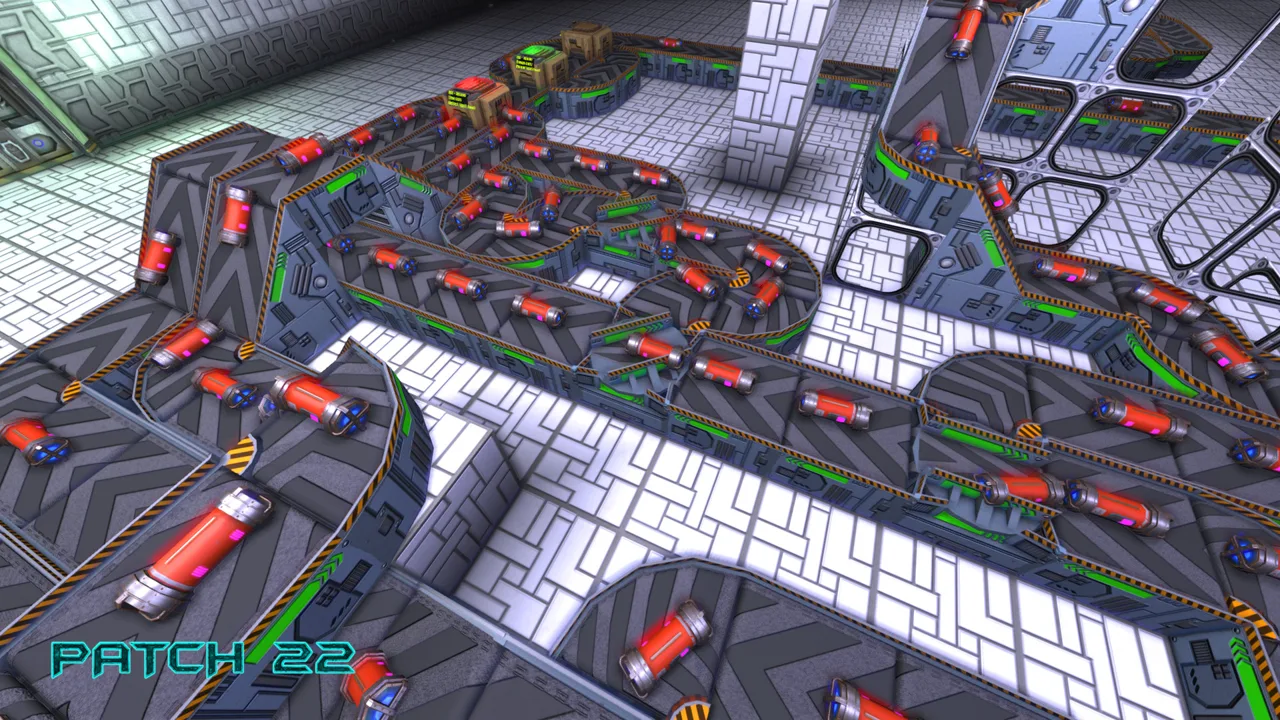
FortressCraft Evolved connects a familiar extractor–conveyor–smelter chain to the question of how far down you can keep it working. Ore is not just another patch beside the starting base: the official description sends extraction thousands of metres below the surface. Processing and power must serve that vertical operation while turrets defend the installation above. Compared with FOUNDRY's editable voxel terrain, the reason to choose this branch is the combination of mining depth, industrial logistics and explicit tower-defense pressure.
An older developer-started Steam discussion about its strengths makes that distinction concrete: Kraytex1 describes planning the trip from a new ore tier to surface processing, while Robert values progression but calls the beginning grindy. Another participant wanted more from the survival and defense elements. These are individual December 2018 experiences, not a verdict on today's balance. Choose it if establishing and protecting the supply route sounds like part of the attraction. Hesitate if you want shapez 2's undisturbed rebuilding, or assume a long feature list guarantees an approachable first hour. Current Steam lists online co-op; this guide does not verify today's joining procedure or dedicated-server setup.
7. Eden Crafters: give the production chain a terraforming objective
Production chains for climate, atmosphere and water. Online co-op · Released.
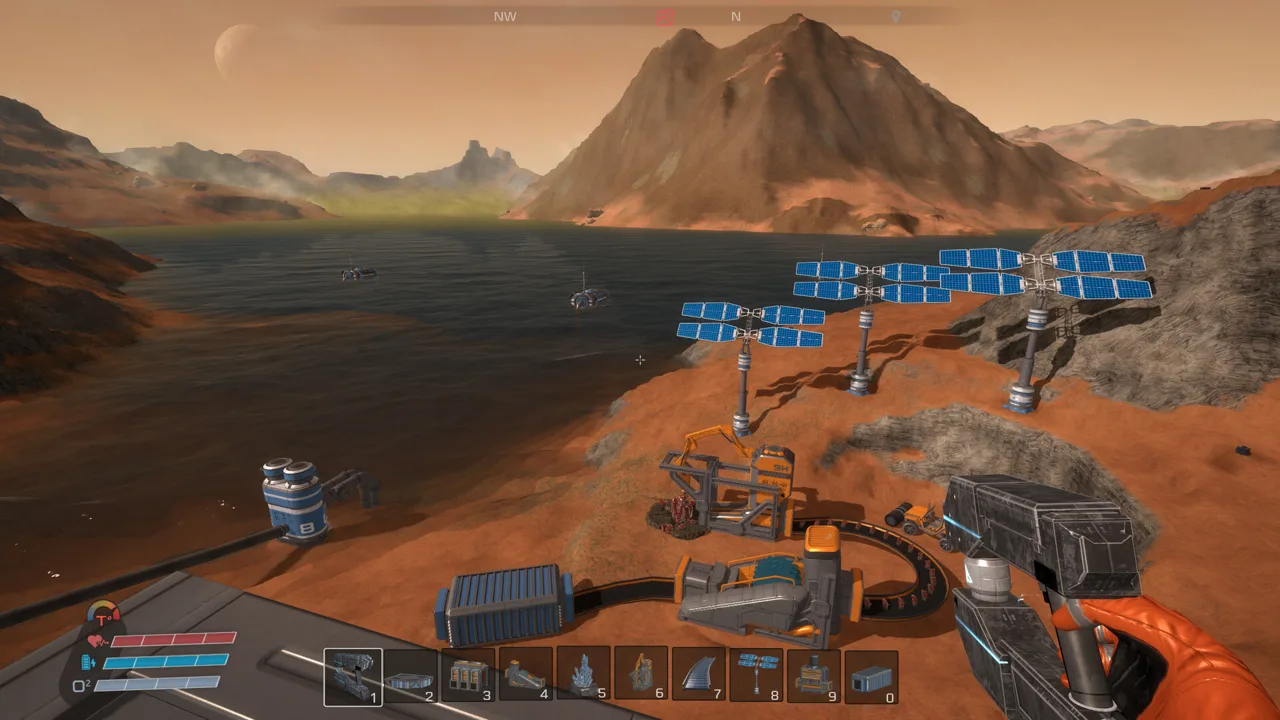
Eden Crafters makes machinery serve an external result: a planet that people can inhabit. Conveyors and processing machines supply environmental systems as you work on climate, atmosphere and toxic water. The current released game lists five base-game planets with different hazards, including giant waves and asteroid storms. If Satisfactory makes the industrial installation itself your main attraction, this is a nearby branch where changing the environment supplies a more explicit reason to keep the factory running.
A player asking for an organized base receives warehouse-centered advice and replies from people happy with much messier layouts. That disagreement is useful: the question is whether you enjoy arranging the factory, meeting the environmental objective, or both. In another October 2026 comparison thread, participants distinguish its industrial logistics from Planet Crafter while also mentioning clipping and hosting friction. We did not test those reports, and they are not universal defects or multiplayer setup instructions. Choose it if automation plus survival and visible environmental change is the combination you want. Look elsewhere if you want shapez 2's separation from survival chores. Steam currently lists released 1.0 and online co-op; old Early Access roadmaps do not describe its current status.
Production with another purpose
8. Captain of Industry: make industry support an island population
Mining terrain, factory logistics and population supplies. Single-player · Early Access.
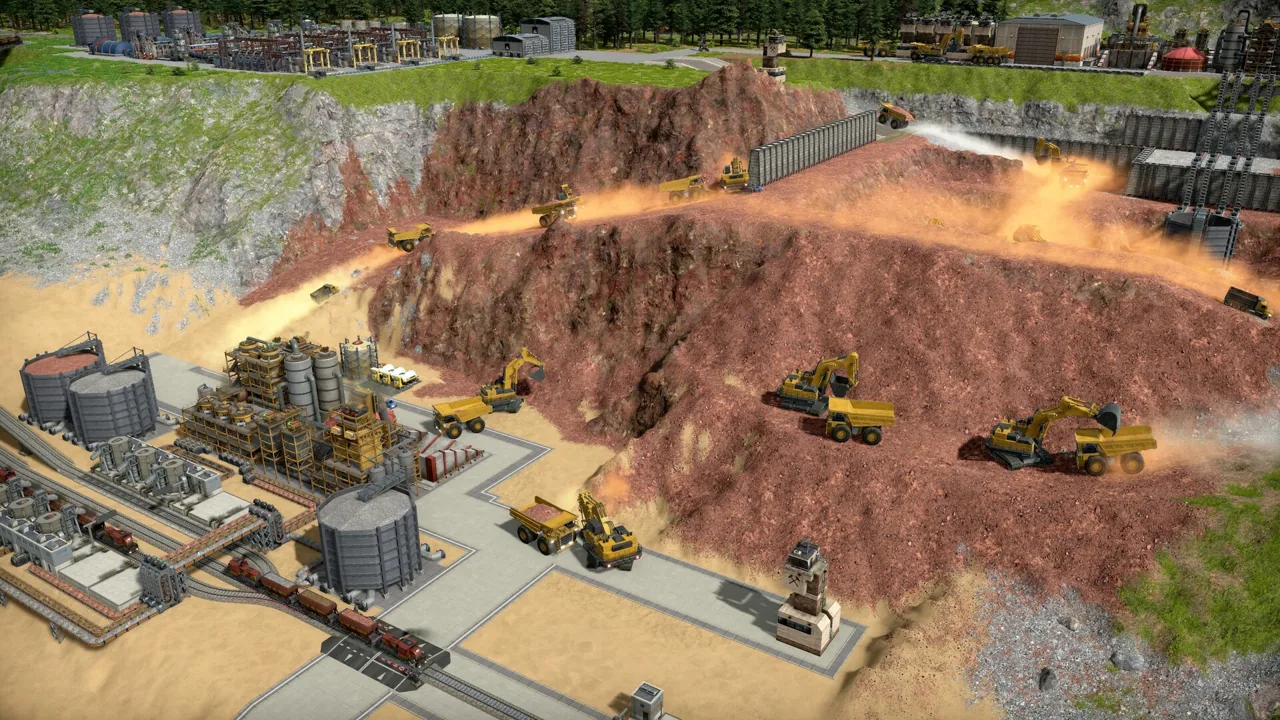
Start with a crew and a supply ship, then develop mining, factories, food production and transport on a reshaped island. Excavators and trucks make the land itself part of your production plan: reaching ore or creating room can require ramps, digging or dumping material. Trucks, trains, conveyors and pipes have different jobs in moving what the settlement needs.
Choose it if you want industrial efficiency to answer to an inhabited place. Housing, clean water, food, healthcare, waste and pollution compete for attention with the next production upgrade. That creates a different expansion question from adding another assembly line: can the island and its people support it? It is a weaker fit if inhabitants' requirements feel like a distraction from machine design. The game is currently in Early Access and its Steam listing is single-player.
9. Factory Town: send the production chain to a village market
Workers, markets and mechanical transport in a village. Single-player · Released.
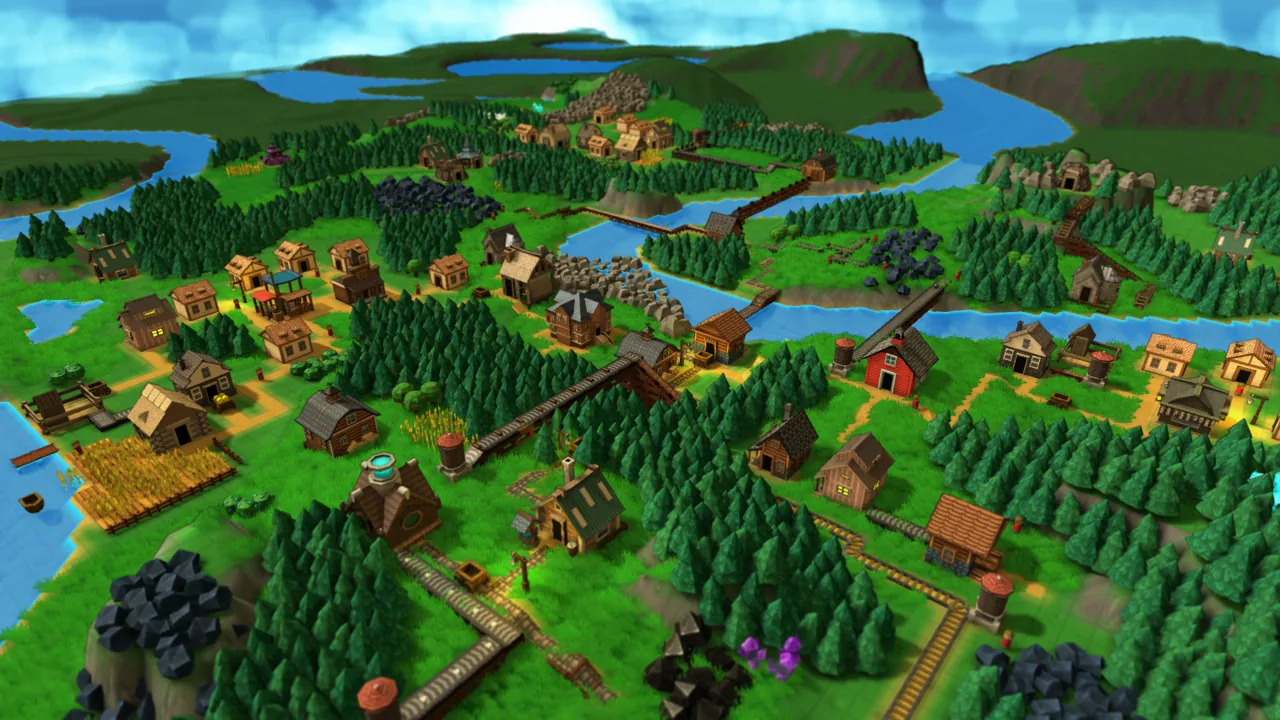
Factory Town turns raw materials into food, clothing, tools, books and magical goods for a growing village. Workers can carry items, but mechanical routes take over an increasing part of that job. Gravity chutes, conveyor belts, rails and pipes make distance and the path from one producer to the next the main design problem.
Choose it if you want production chains with a village economy and a less industrial theme. Its official description explicitly removes enemies and starvation, while retaining logistics and output optimization. That makes it a more precise answer than recommending any city builder simply because it has workshops. Know the limit: this remains a systems game about moving and processing goods, rather than primarily a drama about individual residents. Campaign maps provide goals, and custom or sandbox maps offer a different way to build. Steam lists single-player.
10. Learning Factory: route customers as well as the products they buy
Production, customer routing and sales-data experiments. Single-player · Released.
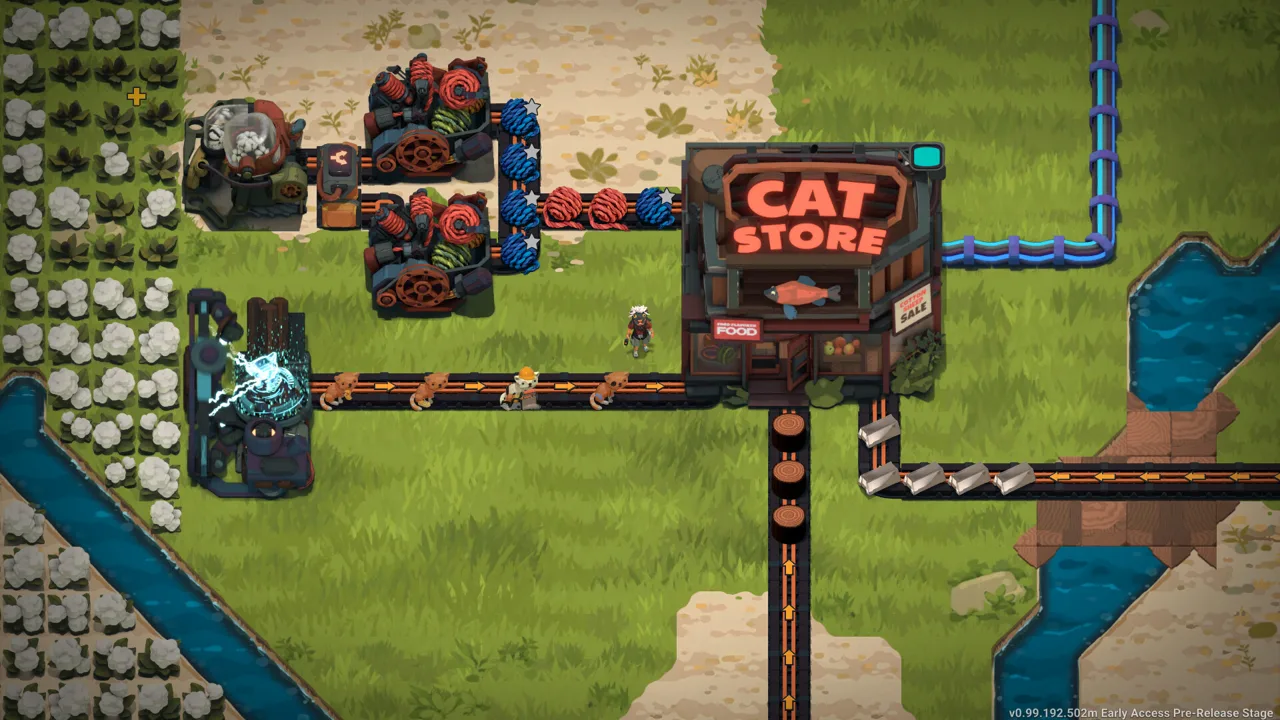
Learning Factory adds another flow to the conveyor diagram: the cats who need to reach the right shops. You manufacture and deliver goods, route customers, keep stores supplied and use sales data in machine-learning models. Underground and air transport expand the physical network, while the commercial side asks whether the factory is serving the right demand. Compared with Factory Town's village supply, the distinctive extra task is experimenting with the information produced by the shops.
A Steam question about colored shop displays receives a developer explanation about connected stores, data and model groups. The later reply warns that both overly simple and very mixed data can cause problems for learning. This is a historical August–December 2025 explanation, useful for understanding the kind of question the game raises; this page is not a verified model-configuration tutorial. Choose it if you want a peaceful production network with customers and a data-experiment twist. Hesitate if the cats suggest a decorative reskin to you: the information layer matters to the premise. The official description says there are no enemies and includes educational material, but that is not a guarantee of a complete machine-learning course or an effortless puzzle. Steam lists single-player and a released game.
Workers, creatures and logistics rules
11. Oddsparks: replace belts with a traffic problem made of creatures
Sparks carrying and crafting along a logistics network. Online co-op · Released.
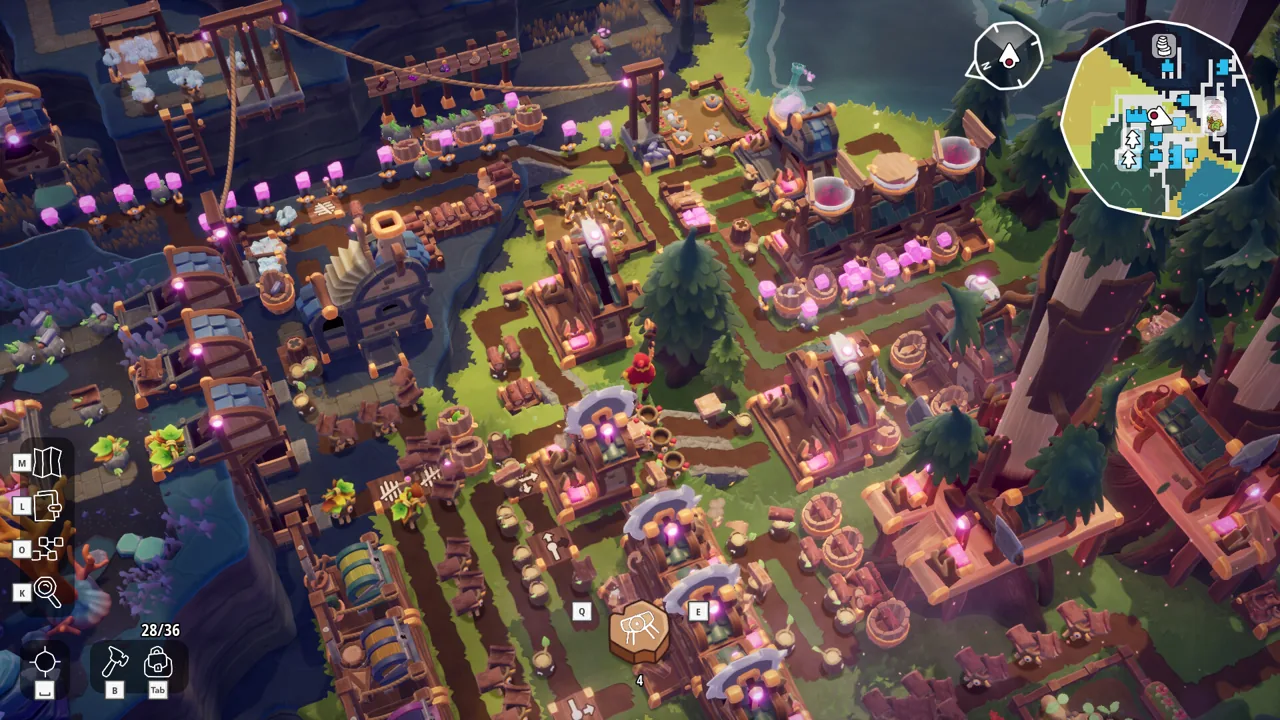
Small creatures called Sparks craft goods and carry them between workshops. Without conveyor belts, you organize their traffic, distances and changes in elevation instead. The production system makes more Sparks as well as other goods, and the current description includes logic tools and an elevated train system for extending the network.
Choose it if you want to recognize the routing-and-throughput puzzle while changing the things that move through it. A fantasy village and adventures give the automation a different setting from a remote industrial planet. Do not confuse the artwork with a no-combat promise: exploration includes enemies, and the current game also advertises defending workshops from waves of corruption. Online co-op is listed, so it is worth comparing with Satisfactory when your group wants a shared production project with a different visual and mechanical identity.
12. Autonauts: make the workers' instructions the automation puzzle
Teaching workerbots to repeat production tasks. Single-player · Released.
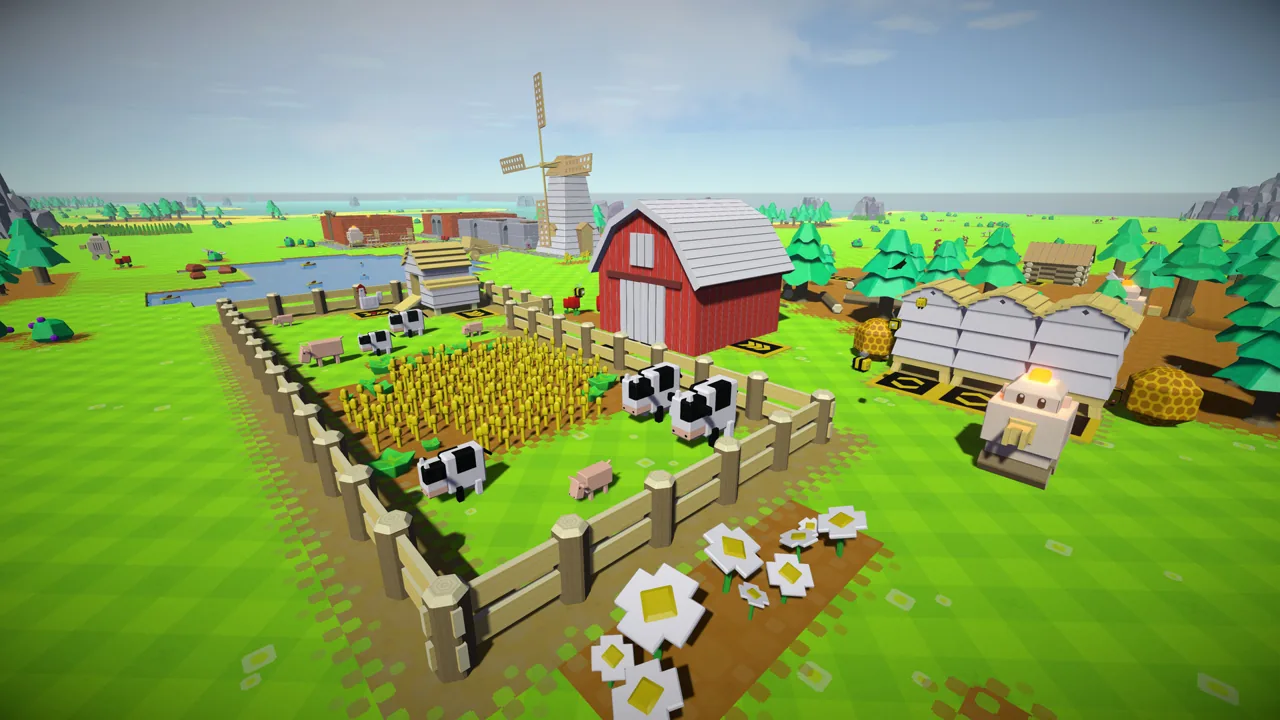
Autonauts starts with basic gathering and crafting, then asks you to teach workerbots how to do the jobs. Its visual programming language turns repeated actions into instructions you can expand, refine and share between bots. As the colony grows, that work spreads into farming, cooking, fishing, construction and supplying inhabitants.
Choose it if you enjoy deciding how a worker should perform a routine, rather than only where a conveyor should carry its ingredients. The question becomes whether you taught and equipped the bot for the job as well as whether the workshop has materials. It is not an exact substitute for a sprawling belt network or a factory-defense campaign. The bright presentation accompanies a focus on programming and linked colony tasks. If you want to spend most of your attention on the layout of static machines, shapez 2 is the more direct branch of this guide.
13. Desynced: replace belt routing with bot behavior and network rules
Beltless logistics, configurable bots and scripting. Online co-op · Released.
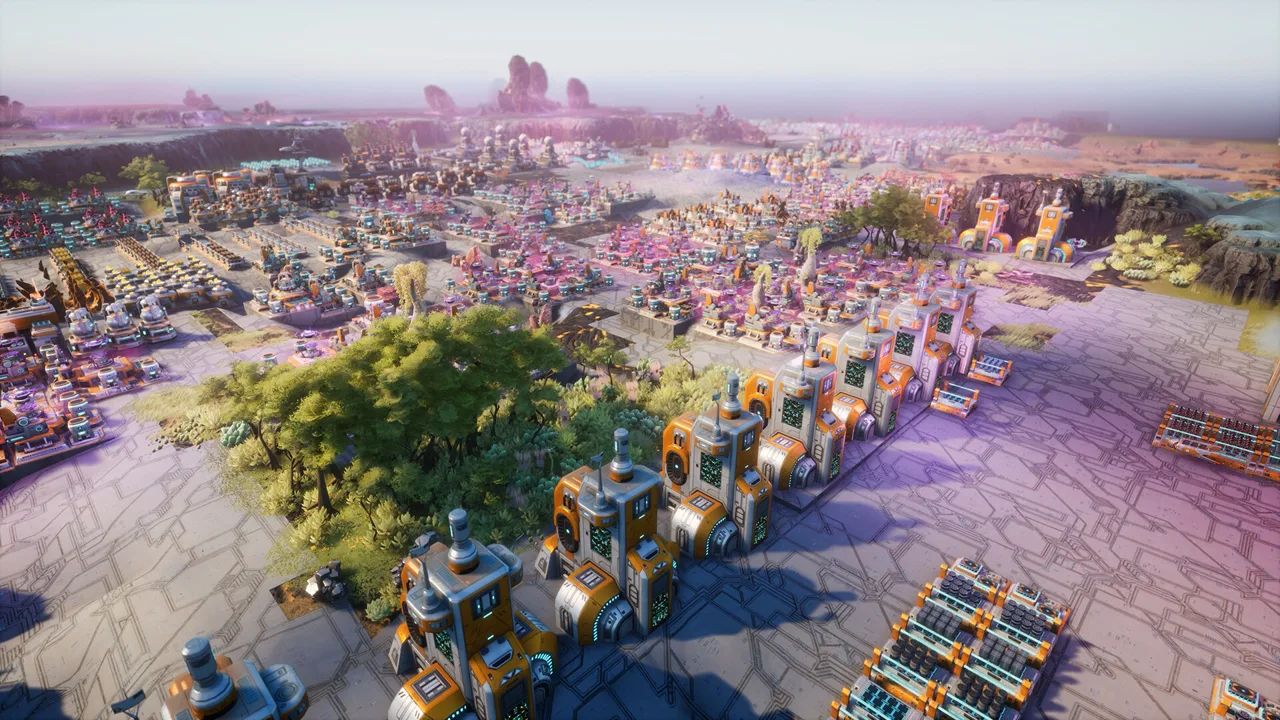
Desynced removes belts without removing the question of how a factory gets supplied. Drones in a logistics network fulfil material orders; units and buildings can carry different components, and parameters or a drag-and-drop behavior editor let you customize their work. Your next useful improvement may be a better rule or allocation of transport jobs rather than another parallel conveyor. Autonauts also asks you to think about workers, but Desynced combines configurable units with a science-fiction base, research, exploration and threats.
Repsack's player-written tips thread describes separating logistics networks and using building-to-building transport to reduce bot work. A separate automatic-crafting question contains tentative answers and conflicting-factory concerns. The useful buying distinction is that removing belts moves complexity into behavior and coordination; it does not remove complexity altogether. Choose it if debugging what the workforce should do sounds more interesting than drawing another bus. Look elsewhere if the visible flow along a fixed belt is the main reward. The current store is the released 1.0 game, with online co-op listed; the older discussion's Early Access wording and example scripts are not current-build guarantees.
14. Nova Lands: let helper bots maintain the chain while you explore
Small bot-run production chains and island exploration. Single-player · Released.
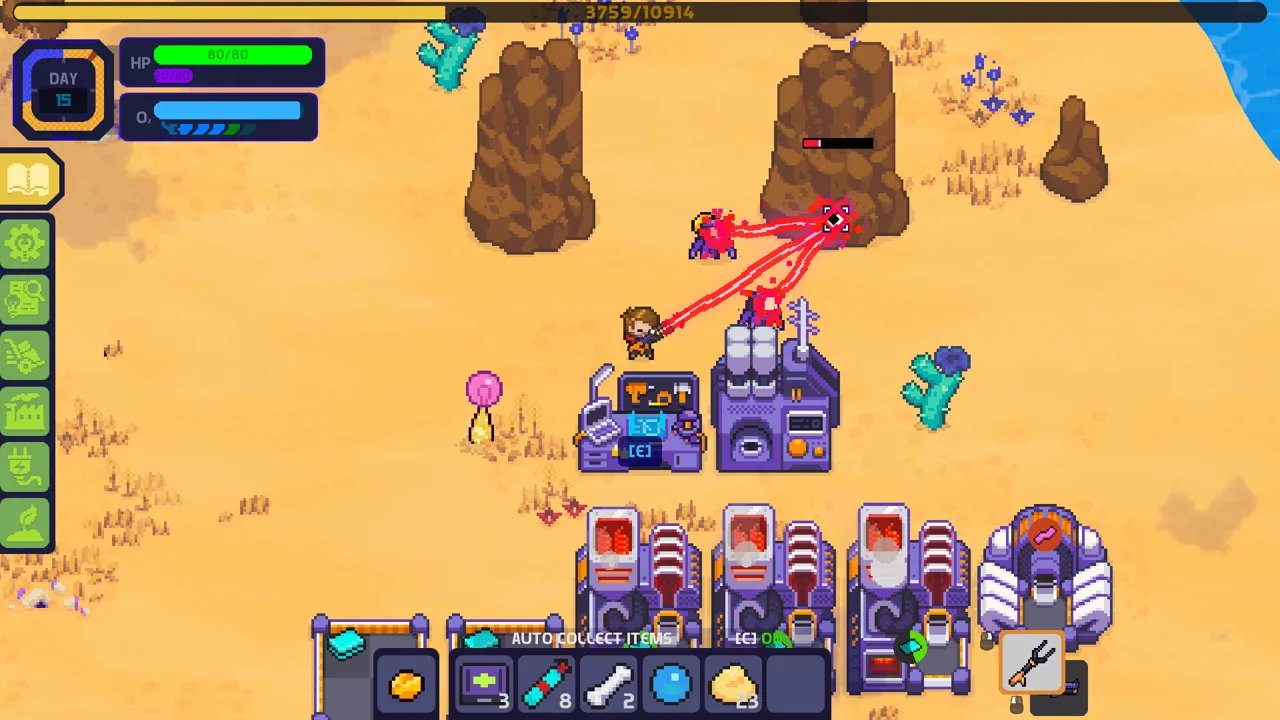
Nova Lands links a 2D island adventure to a growing automated base. Early gathering and new buildings open more production possibilities; helper bots eventually sustain chains while you travel to other islands, meet characters and search caves. The contrast with Desynced is what automation is for: here it buys freedom to leave the workshop and explore, rather than making a configurable logistics workforce the whole center of attention. It also gives the Forager-style island loop a stronger production-chain branch.
In the launch-era player tips thread, Raitor recommends automating farming and water together, while BlackAura describes overlooking an important shop unlock. Treat those June 2023 accounts as an illustration of progression dependencies, not a current walkthrough or a promise of an unchanged unlock order. Choose it if you want automation to support travel and discovery. Hesitate if you mainly want Factorio's enormous belt-routing problem or native co-op: the current Steam listing is single-player. The official description offers a blaster and threatening creatures, but also a pacifist route that trades valuables for peace; cheerful pixels do not mean there are no encounters or resource demands.
Machine puzzles with a defined assignment
15. Infinifactory: solve a production specification one puzzle at a time
Assembling prescribed products in a three-dimensional puzzle. Single-player · Released.
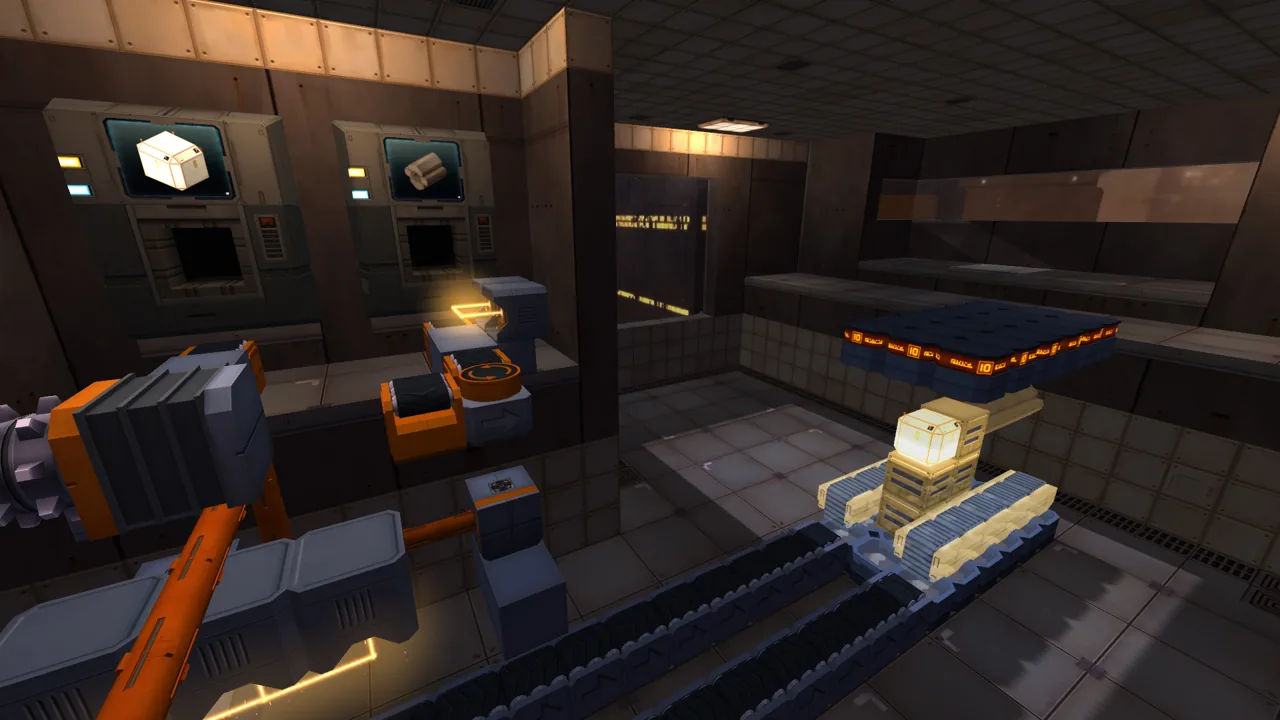
Zachtronics' Infinifactory is the puzzle-shaped branch of this comparison. Build and run factories in a first-person three-dimensional environment to assemble the products demanded by alien overlords. The campaign supplies more than fifty puzzles, while solution histograms invite another pass at a design after it already works. A sandbox and Workshop puzzles provide other ways to use its moving blocks.
Choose it if what you want after Factorio is a specific manufacturing problem with room to improve your answer. It replaces the long arc of expanding a resource economy with a series of production specifications. Choose something else if connecting a continuously growing world is essential: a collection of factory puzzles serves a different appetite. This is also a useful contrast for a player who likes optimization but wants the next task supplied rather than inventing a larger megabase goal.
16. Opus Magnum: synchronize one elegant machine instead of expanding a world
Programmable arms, spatial assembly and timing. Single-player · Released.
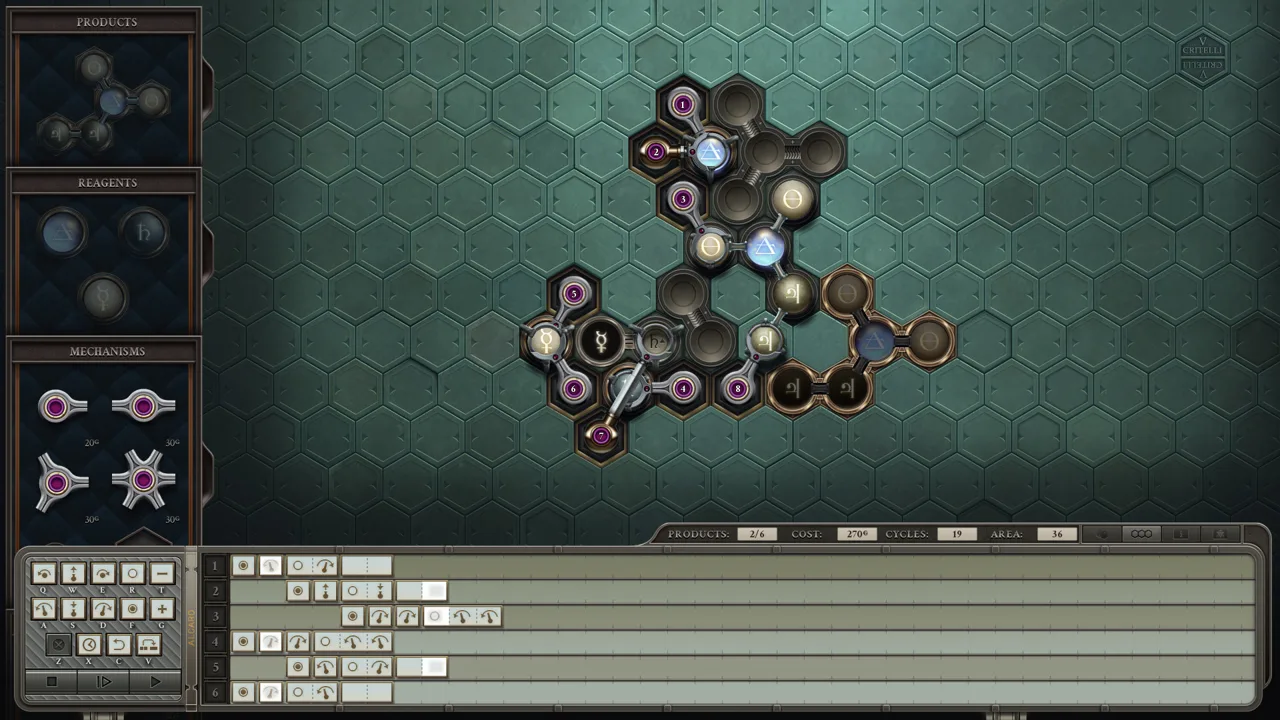
Opus Magnum belongs beside Infinifactory in the puzzle branch, rather than beside Dyson Sphere Program as another megabase. Programmable arms and tracks move ingredients through an alchemical machine. A solution must assemble the required product; after that, cost, speed and footprint give you different reasons to revise it. Infinifactory emphasizes the path and assembly of blocks in a three-dimensional space. Here the visible instruction timeline makes synchronization between moving arms part of the design itself.
A player struggling to visualize a repeating product receives suggestions to solve smaller testable sections before joining them. The original poster later identifies a misunderstanding of repetition, while another participant finds timing harder than geometry. That is a more useful warning than calling the game simply relaxing or difficult. Choose it if Factorio's best moment is discovering why an arrangement works and making it cleaner. Skip this branch if harvesting, a continuous world or a shared factory with friends is essential. The official store lists single-player, a story and Workshop puzzles. It offers open-ended solutions to individual assignments, not an open-ended industrial economy; neither a story puzzle count nor a leaderboard position is a measure of how long you will enjoy optimizing it.
Sources, scope and how to use the comparison
Responsible editor: Indie Lantern. This is source research, comparative writing and editing with AI assistance. Current identities, release status, platforms and native mode labels were checked against official Steam pages on 27 October 2026. We inspected credited promotional screenshots and fixed frames from developer/publisher-supplied trailers, not every scene or a full playthrough. Some footage shows older or work-in-progress builds. We did not install, play, record or benchmark the games. The comparisons are editorial judgments grounded in the described mechanics, not unrecorded first-hand reviews.
The original ten entries remain and six distinct games extend the choice: deep extraction plus defense, terraforming, behavior-based logistics, exploration supported by bots, customer/data flows, and timed alchemical machinery. Each has its own section and illustration; editions, DLC and modes are not counted as extra games. This is a curated selection, not an exhaustive survey of every automation game.
The Reddit questions linked above were read for the original comparison; we re-read retained text for this update because direct access was blocked. Their displayed ages and sometimes inconsistent crawl labels do not establish exact creation dates or current features. New Steam discussion reading is linked inside the relevant entries, with player experience, developer replies and historical limits distinguished. Mentions and comments are not representative consensus or measured popularity. Screenshots come from official promotional store assets for this credited editorial comparison, not from community posts or public YouTube thumbnails.
If your real priority is managing residents, maintaining a habitat or building a survival home rather than automating a process, use our base-building comparison to choose that branch. The automation catalog provides a broader browsing route. Neither link makes the sixteen choices here interchangeable: pick the task and limitations you actually want to spend time with.